
Blog
Why EVs Need Stronger Suspension Components

Why EVs Need Stronger Suspension Components
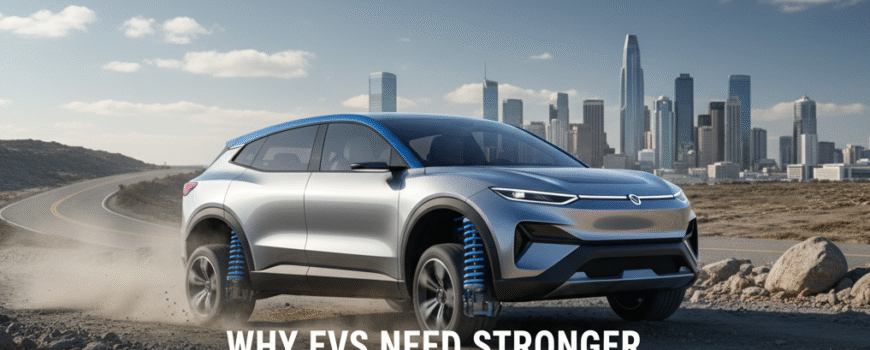
Electric vehicles place suspension parts under different loads than similarly sized petrol vehicles. The biggest reason is simple: battery packs are heavy, mounted low, and carried all the time. That extra mass improves stability in some situations, but it also means springs, dampers, control arms, bushings, and wheel bearings work harder over every bump, corner, and braking event.
Symptoms of Weak or Overworked Suspension
- Excessive bounce over sharp bumps: Dampers may be struggling to control the extra vehicle weight.
- Uneven tire wear: Poor damping and worn bushings let alignment change under load.
- Clunks or knocks: Heavier EVs can reveal weak links and tired bushings sooner.
- Loose steering feel: Compliance in control arm bushings or toe links becomes more noticeable.
Why EV Loads Are Different
An EV does not just weigh more; it often carries that weight in a way that changes how the chassis reacts. Instant torque loads driveline and suspension mounts aggressively, regenerative braking transfers weight repeatedly, and the curb weight itself raises the stress on dampers, top mounts, lower control arms, and tires. That is why a suspension setup that feels adequate on a lighter car can feel underdamped or short-lived on a heavier EV.
The effect becomes even more obvious on rough roads, in cold climates, or when the car runs large wheels with short sidewalls. The suspension has less tire compliance to absorb impacts, so the chassis components take more of the hit.
Parts Worth Inspecting First
- Shocks and struts: These control vertical body motion and are often the first parts to feel overwhelmed.
- Coil springs: Sagging or tired springs reduce ride height and suspension travel.
- Control arms and bushings: Under heavy EV loads, worn bushings can create alignment drift.
- Rear toe links and lateral arms: Critical on EVs that chew through inner tire edges.
Installation Difficulty
Inspection is straightforward, but full suspension replacement is a moderate job that usually needs proper lifting equipment, torque specs, and a final alignment. If you are replacing springs, dampers, or arms, plan for a four-wheel alignment before the car goes back into normal use.
Recommended Upgrades
- EV-rated or heavy-duty dampers: Better body control without the floaty feeling some stock setups develop.
- Higher-quality bushings or fresh OE-style arms: Restores precision when a heavy EV starts feeling vague.
- Ride-height and alignment correction after lowering: Especially important on Teslas and other EVs sensitive to rear tire wear.
If you want the weight-and-wear side explained in more detail, read EV Weight vs Suspension Wear. For a model-specific example, our Tesla Model 3 suspension guide shows how these loads become real-world failures.
FAQ Section
Do EVs always need aftermarket suspension parts?
No. Many factory EV suspensions are well matched to the vehicle. The problem appears when components wear, the car is lowered without correction, or the owner wants better control under the added mass.
Does more weight automatically mean shorter suspension life?
Not automatically, but it usually increases the importance of damper quality, bushing health, alignment, and tire pressure. Heavy EVs are less forgiving when maintenance slips.
Will better suspension improve efficiency?
Not in a dramatic headline-grabbing way, but a healthy suspension reduces scrub, keeps alignment stable, and helps tires roll more consistently.
What should I upgrade first?
Start with diagnosis, not parts shopping. If the car is bouncy, noisy, or wearing tires unevenly, inspect dampers, bushings, and alignment before deciding whether you need upgraded hardware.