
Blog
EV Weight vs Suspension Wear – What You Need to Know

EV Weight vs Suspension Wear: What You Need to Know
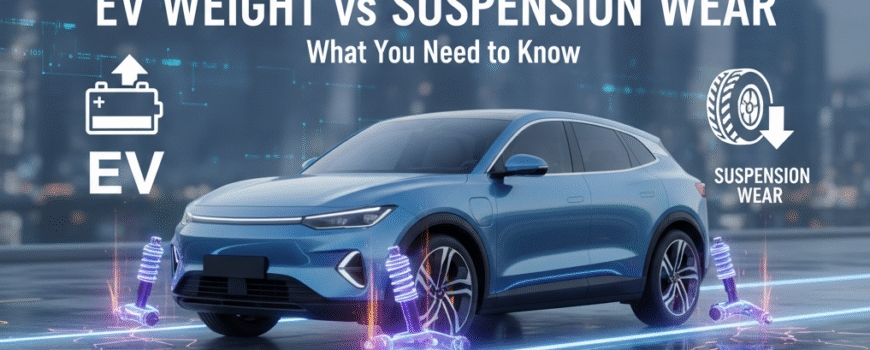
Battery weight is one of the main reasons EV suspension wear deserves closer attention than many owners expect. A heavier vehicle can still ride beautifully, but only if the dampers, springs, bushings, and alignment stay in good shape. When they do not, the extra mass shows up quickly as clunks, uneven tire wear, harshness, or poor body control.
Symptoms of Suspension Wear in EVs
- Clunking over bumps: Often points to worn links, mounts, or bushings.
- Uneven tire wear: A common early warning that geometry is changing under load.
- Poor ride control: If the car feels floaty or crashes into sharp bumps, the dampers may be tired.
- Wandering or steering corrections: Suspension compliance can make a heavy EV feel less precise at speed.
Which Parts Carry the Load
Shocks and struts manage body motion. Springs support the constant weight of the vehicle. Control arm bushings and rear links keep the alignment where it belongs while the car accelerates, brakes, and corners. On an EV, all of those jobs happen under higher average load than on a lighter vehicle, so small weaknesses show up sooner.
That does not mean every EV destroys suspension parts. Driving style, wheel size, road quality, and maintenance habits all matter. But it does mean heavy EVs reward proactive inspections more than wait-until-it-breaks ownership.
Parts Needed to Repair Wear Properly
- Quality replacement dampers or struts: Needed when body control has faded.
- Fresh springs if ride height has sagged: Sag reduces suspension travel and can worsen tire wear.
- Control arms, toe links, or bushings as needed: Replace the worn joint instead of chasing alignment forever.
- Four-wheel alignment: Essential after suspension work on any EV.
Installation Difficulty
Basic inspection is easy, but replacing loaded suspension parts is a moderate repair and should end with a proper alignment. If you are dealing with rear tire wear on a Tesla, Rivian, or Lucid, alignment numbers are not optional; they are the starting point.
Recommended Upgrades
- Heavy-duty or EV-tuned dampers: Better control over repeated vertical movement.
- Fresh alignment hardware on rusty cars: Important in wet or snowy climates where seized adjusters make accurate setup difficult.
- Routine inspections after pothole impacts: Heavy EVs can knock rear toe or camber out more easily than owners expect.
For a broader explanation of why heavier EVs challenge suspension systems, see Why EVs Need Stronger Suspension Components. If your concern is a specific Tesla wear pattern, our Model Y rear tire wear guide walks through a real-world example.
FAQ Section
Are EVs always harder on suspension than petrol cars?
Not always, but the added battery mass raises the baseline load on suspension components, so wear can become more obvious when maintenance falls behind.
What is the first sign that EV weight is affecting the suspension?
Uneven tire wear and declining ride control are usually the first clues. Many owners notice tires before they notice the dampers.
Can wheel size make the problem worse?
Yes. Larger wheels and shorter sidewalls reduce impact absorption from the tire, which pushes more of the work into the suspension.
Should I upgrade or just replace worn parts with OE-style components?
That depends on your goals. OE-style parts are usually fine for daily driving. Upgraded dampers or adjustable arms make more sense when the car is lowered, heavily loaded, or driven hard.